Donate to Madagascar's last forests, the endangered species who live there and the communities who rely on them
Gillian and Maso
My Story
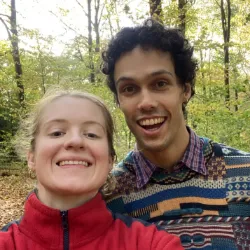
We're Gillian and Maso, two Australians living in Belgium, who are very passionate about protecting our planet. Later this year, we are both volunteering for a month in Madagascar with SEED Madagascar and are fundraising for some of the projects we'll be helping out on (like helping to create new biodiversity corridors, planting trees to combat deforestation, as well as conducting research on endangered species, like the endemic lemur and gecko populations, to aid conservation efforts).
We're doing this because we want to give back and make an impact, especially in a time where it feels like the world is going in the wrong direction.
Help us make an impact by donating to SEED! And keep reading to find out where your money would go to help...
Why donate?
The beautiful island of Madagascar is extremely threatened by deforestation (nearly 90%) and human exploitation, and is one of the poorest countries in the world. In Madagascar, a huge amount of people face extreme poverty, in particular young people (80%), are undernourished (40%), and without access to drinking water (46%) or education (50% in the Anosy region have never been to school).
For a small organisation like SEED Madagascar, your contributions make a real difference.
Donating will help SEED build resilience in local communities, protect the environment from further degradation, and save species from man-made threats.
Where will your money go?
Your donation will go directly to help SEED Madagascar's projects, which range from environmental conservation to community development.
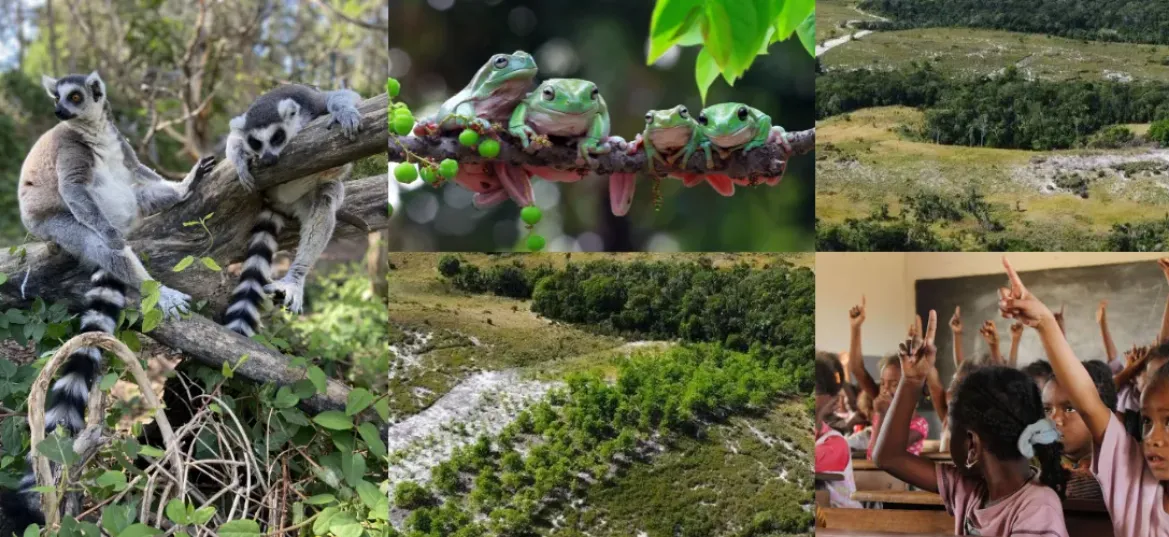
Madagascar has suffered nearly 90% deforestation, yet it is home to approximately 5% of the world's species, many of which are endemic, meaning they exist nowhere else. The southern littoral forests in Sainte Luce are one of the last of their kind, known for their extraodinary biodiversity and home to endangered lemur species, along with countless plants, amphibians, reptiles and insects. The forest is also relied upon heavily by local communities for resources.
SEED Madagascar's projects include:
Education infrastructure
In the Anosy region of Madagascar, many children do not have access to education. Only around 50% of children have been to primary school. Through SEED's education projects, they aim to tackle this by building new schools, repairing existing buildings, providing furniture and facilities to schools in need, and supporting teachers to teach. Find out more here.
Establishing biodiversity corridors with Project Ala
Sainte Luce littoral forest is threatened by deforestation and degradation due to mining, high community dependence on natural resources, and tavy (the clearance of land with fire for agriculture). To address these threats and conserve the unique biodiversity of Sainte Luce, SEED developed the Ala Programme (ala meaning forest in Malagasy). The Ala Programme aims to improve habitat connectivity and species dispersal through the creation of forrest corridors, counteracting these pressures. Find out more here.
Project Palms
Project Palms works to protect six endangered palm species found in the Sainte Luce littoral forest by re-wilding. In 2024, SEED planted over 1,000 endangered palm seedlings. To do this, SEED has gathered local knowledge through community surveys, focus groups, and interviews with experts, to ensure traditional uses are respected and aligned with community priorities for protection. Find out more here.
Conservation Research
SEED has been working in the Sainte Luce area of southeast Madagascar for over 15 years, operating from a permanent research camp on the edge of the littoral forest on various conservation research projects. With a dedicated team of national and international researchers, Malagasy field guides and international volunteers, SEED has carried out extensive research into this area of extreme biodiversity, and worked with the local community on conservation initiatives (like the projects above). For example, surveys of herpetofauna, lemurs, and the anosy day gecko, one of the most endangered geckos in the world. Find out more here.
Any little amount that you can afford to donate counts!
- £10 can provide a beekeeper with a protective bee suit, making it easier to carry out hive management and earn a sustainable livelihood.
- £25 can provide a desk and bench for an underequipped public school, improving learning conditions for children who would otherwise study on the floor.
- £150 can provide a well pump to a remote village, ensuring their access to clean drinking water and improving community health.
Thank you so much for taking the time to learn a little more about SEED Madagascar, and thank you for donating!
-
Target
£3,000
-
Raised so far
£3,311
-
Number of donors
28
My Story
We're Gillian and Maso, two Australians living in Belgium, who are very passionate about protecting our planet. Later this year, we are both volunteering for a month in Madagascar with SEED Madagascar and are fundraising for some of the projects we'll be helping out on (like helping to create new biodiversity corridors, planting trees to combat deforestation, as well as conducting research on endangered species, like the endemic lemur and gecko populations, to aid conservation efforts).
We're doing this because we want to give back and make an impact, especially in a time where it feels like the world is going in the wrong direction.
Help us make an impact by donating to SEED! And keep reading to find out where your money would go to help...
Why donate?
The beautiful island of Madagascar is extremely threatened by deforestation (nearly 90%) and human exploitation, and is one of the poorest countries in the world. In Madagascar, a huge amount of people face extreme poverty, in particular young people (80%), are undernourished (40%), and without access to drinking water (46%) or education (50% in the Anosy region have never been to school).
For a small organisation like SEED Madagascar, your contributions make a real difference.
Donating will help SEED build resilience in local communities, protect the environment from further degradation, and save species from man-made threats.
Where will your money go?
Your donation will go directly to help SEED Madagascar's projects, which range from environmental conservation to community development.
Madagascar has suffered nearly 90% deforestation, yet it is home to approximately 5% of the world's species, many of which are endemic, meaning they exist nowhere else. The southern littoral forests in Sainte Luce are one of the last of their kind, known for their extraodinary biodiversity and home to endangered lemur species, along with countless plants, amphibians, reptiles and insects. The forest is also relied upon heavily by local communities for resources.
SEED Madagascar's projects include:
Education infrastructure
In the Anosy region of Madagascar, many children do not have access to education. Only around 50% of children have been to primary school. Through SEED's education projects, they aim to tackle this by building new schools, repairing existing buildings, providing furniture and facilities to schools in need, and supporting teachers to teach. Find out more here.
Establishing biodiversity corridors with Project Ala
Sainte Luce littoral forest is threatened by deforestation and degradation due to mining, high community dependence on natural resources, and tavy (the clearance of land with fire for agriculture). To address these threats and conserve the unique biodiversity of Sainte Luce, SEED developed the Ala Programme (ala meaning forest in Malagasy). The Ala Programme aims to improve habitat connectivity and species dispersal through the creation of forrest corridors, counteracting these pressures. Find out more here.
Project Palms
Project Palms works to protect six endangered palm species found in the Sainte Luce littoral forest by re-wilding. In 2024, SEED planted over 1,000 endangered palm seedlings. To do this, SEED has gathered local knowledge through community surveys, focus groups, and interviews with experts, to ensure traditional uses are respected and aligned with community priorities for protection. Find out more here.
Conservation Research
SEED has been working in the Sainte Luce area of southeast Madagascar for over 15 years, operating from a permanent research camp on the edge of the littoral forest on various conservation research projects. With a dedicated team of national and international researchers, Malagasy field guides and international volunteers, SEED has carried out extensive research into this area of extreme biodiversity, and worked with the local community on conservation initiatives (like the projects above). For example, surveys of herpetofauna, lemurs, and the anosy day gecko, one of the most endangered geckos in the world. Find out more here.
Any little amount that you can afford to donate counts!
- £10 can provide a beekeeper with a protective bee suit, making it easier to carry out hive management and earn a sustainable livelihood.
- £25 can provide a desk and bench for an underequipped public school, improving learning conditions for children who would otherwise study on the floor.
- £150 can provide a well pump to a remote village, ensuring their access to clean drinking water and improving community health.
Thank you so much for taking the time to learn a little more about SEED Madagascar, and thank you for donating!
Gillian and Maso is fundraising towards